
How to Interpret Houses in Astrology — Part 7: The Sixth House

The sixth house in astrology is a fun one, if you’re into discipline.

Let’s just get this out of the way up front: the sixth house is one of the places that reminds us that a balanced life is one that has crummy parts to it, but amidst the garbage we can still find diamonds in the rough.

A few weeks ago, I had a dream that was straightforward in its imagery but powerful in its implications. The dream found me in a conference room somewhere in the electric wilds of Tokyo (Akihabara, to be specific) delivering a lecture on horary astrology to a room full of entertainment executives who had flown me in to train individuals on their staff in the art of horary and elections for business purposes.

Final Fantasy creator Shironobu Hakaguchi was in the room, taking copious notes and asking an endless stream of questions. By the end of the dream he was so taken with the lecture that he invited me to elect the launch date and time of the next entry in the Final Fantasy series. It was a fun dream, to be sure, but this dream was made even more interesting by the fact that it was entirely in Japanese.

Now, in the waking world, my ability with Japanese is rudimentary, despite having been enamored with it since, oh, 1999. When I made that first puerile attempt to pick up the language I had no idea what I was getting into and the fervor of a young weeaboo could only take me so far. The only point of contact I had with learning a language was the old Berlitz “Japanese for Travel” cassette and phrase book sets that I could get from the library. I knew how to say good morning and ask where the bathroom was, but beyond that, I had no idea what a part of speech was, or how to conjugate, or what to do with word order.

Everywhere I turned I hit a brick wall, defeated, disappointed.

Twenty years on I now have the chops to learn a language, and those chops come from years of study, practice, and discipline. Ever since that dream, I’ve been throwing myself into the rigor, tedium, and reward of learning a difficult language from the ground up. 結果は成功しますよ。The work is bearing fruit, but that doesn’t make memorizing thousands of kanji or drilling conjugation forms any less labor-intensive.

This is our first point of contact for the sixth house in astrology.

I joked on Twitter the other day that the sixth house is “big D energy:” disease, drudgery, duty, discipline, and drive. This collection of meanings comes from a confluence of factors, just as we saw with the fifth house.

First, because the sixth house is cadent and in aversion to the ascendant, not only is it considered “ineffective,” but it also can’t connect with the place of the chart associated with life and vitality. For that reason, it has natural connections to illness, disease, and the process of falling away from vitality and activity.

Not everything can be sunshine and daffodils all the time, as much as the “love and light” folks want to make it out to be. Sometimes we get sick, y’all. We’re squishy organisms in a universe that, by and large, is not conducive to life unless you’ve got lead plating for skin. Disease is part and parcel of being human. We have to acknowledge that we have limitations, and the sixth house reminds us of the physical elements of these limits.

The second is that the sixth house is named the “house of Bad Fortune,” according to ancient authorities. The idea of “bad fortune” acknowledges that the accidents we suffer are not the effect of us “manifesting” ill fortune for ourselves; sometimes, shit happens. Chaos is part of the package of existing in a universe where chance and probability is an operating assumption, and there come times in your life where the odds are not in your favor.

However, bad fortune, illness, and injury are sometimes the result of us making poor decisions, using our authority, agency, and drive to put our health and wholeness into jeopardy. When we’re not exerting energy in a disciplined, focused, and honed manner, we’re often toeing the line of disaster. In this way, the sixth house is the part of the chart that describes the risks that are ready to strike when we’re not taking proper precautions, or when we’re a little too confident in our ability to avert fate.

People who were in “bad fortune” situations in the ancient world were often the unlucky people who had been captured and sold into slavery in Hellenistic society. Remember that slavery in the ancient world was quite unlike chattel slavery in the Americas (it was still slavery, though). In the Greco-Roman slavery model, masters had a moral and legal obligation to attend responsibly to the needs of the individuals who were part of their household, working on their masters’ behalf.

If we port this into a 21st century context, the connection here becomes obvious: people who work for us and workers themselves belong to the sixth house. It’s the house of the proletariat. It’s also the house of people for whom we are responsible who are not otherwise related to us by blood. The power dynamic is baked in.

The third factor is that the sixth house is the joy of Mars. Mars is naturally associated with illness, accidents, injuries, and explosive disasters: of all the planets who are wont to cause problems, Mars especially delights in discord, bringing it with him into battle wherever he shows up. For us to avert Mars’ disastrous impact through the lens of the sixth house, we need to build a relationship with his energies that is focused, disciplined, humbled, and honed through diligent application of effort and tedious practice.

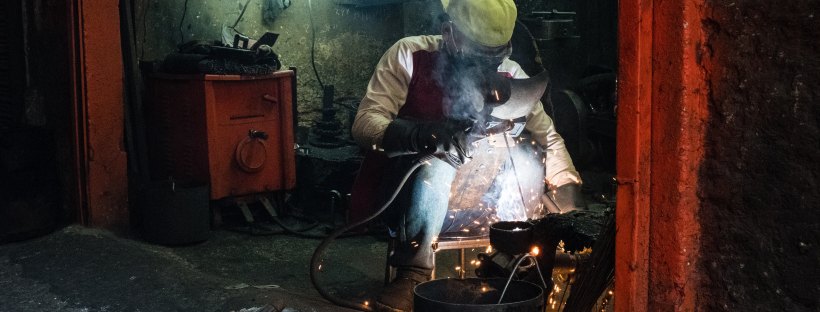
Think about it this way: Mars, the ruler of fire and iron, delights to be in the forge. A forge is a hot, sweaty, sooty, dangerous, and tedious place to be; the blacksmith’s hammer pounds away into the night as they shape a chunk of crude iron into something that can be used. With each shower of sparks that flies off the glowing metal, the form of the tool comes more clearly into focus. What will it be? Will it be the blade of a sword? Of a kitchen knife? Will it be a blade at all—what if it’s a nail, or a horseshoe, or a key blank? We won’t know until the blacksmith has finished the work at the anvil and plunged the finished tool into a trough of water, after which the final form will be revealed in a burst of steam.

Even then, the work isn’t finished yet. The blade must be honed on a whetstone. The horseshoe must be fitted to the horse. The key blank must be fit to its lock.

That’s the real blessing of the sixth house: it’s our point of contact for the crappy, random things that happen in life. However, our response to those ill-fated accidents draws out some of the best of us, when we apply our energy appropriately. The situations and people that get filed in the slice of life that is the sixth house in astrology are elements that require us to step up to the plate and embody responsible effort on their behalf. They form the anvil on which we’re shaped into effective people.

Enduring the heat, soot, sweat, and labor of the sixth house forges us into stronger, more effective individuals.

How to interpret the sixth house

As always, there’s a series of questions to be asked when it comes to interpreting the sixth house in astrology, and the answer are determined by the planet ruling the sixth house, its placement and condition by house and sign, its connection to other planets, as well as any planets placed within the sixth itself. The usual suspects.

Here are the questions to ask:

  • What parts of life become especially difficult for this person?
  • To which kinds of diseases and injuries is this person especially susceptible?
  • Where might a person best expend labor and responsibility to forge and hone themselves into more effective people?
  • To whom or what is a person naturally responsible? What humbles them?

Let’s consider this example: a person has their sixth house cusp falling in the sign Cancer, meaning that the Moon is the ruler of their sixth. Their Moon is in late Sagittarius on the 11th house cusp, peregrine, applying to the conjunction of Saturn in Saturn’s term and face (for advanced readers, this means that there is some very light reception happening here, nothing too strong). We can answer the questions as follows, knowing that the Moon is also naturally the ruler of a person’s emotional center of gravity and coping skills.

  • For this person, finding a place to call “home” relative to groups, friends, association, and community becomes especially fraught with difficulty. Not impossible, but it will take this person quite a bit of time to land in a community or circle of friends where they feel like they fit in and are able to form secure bonds.
  • Sagittarius rules the hips, thighs, and buttocks (what I like to call “ye olde haunches”). This person will be susceptible to bone and joint problems in this part of the body, because of the sixth ruler’s conjunction to Saturn—and these will likely be injuries due to stiffness and lack of flexibility, or from wear and tear.
  • This person can best expend their labor and responsibility to forge themselves into a more effective person through disciplining their interior emotional state and impulse to get the hell out of dodge (Sagittarius Moon) any time things start to go pear shaped. Being able to see things through to the end is a crucial growth point for them.
  • This person is naturally responsible to their sense of identity within a collective setting (sixth ruler in the eleventh house in a fire sign). There’s an ideological and spiritual responsibility here too, considering the nature of Sagittarius as ruled by Jupiter. Because of the nature of the Moon-Saturn conjunction this responsibility is one that matures the native by driving them to nurture, protect, and bolster the people in their circles. They’re a consummate dad friend.

For the purposes of getting you started with the sixth ruler, let’s look at the ruler of the sixth house through each of the other houses. The question here is the third one in the list above: Where can I best expend labor and responsibility to forge myself into a more effective person?

I best forge myself into a more effective person through applying rigor and discipline to and through:

  • Ruler of the sixth house in the first house: …my health, appearance, and overall circumstances. The disciplines of intense physical training are absolutely vital for my well-being and I become my best self through my body..
  • Ruler of the sixth house in the second house: …my finances, resources, and ability to generate income for myself. I must learn how to keep a budget.
  • Ruler of the sixth house in the third house: …my day to day environment, my siblings, relatives, and ability to keep my word. Learning to use something like a bullet journal and remembering to check in on my “lateral contemporaries” will keep me on the straight and narrow.
  • Ruler of the sixth house in the fourth house: …my relationship with my parents and my efforts in maintaining a stable home environment, regardless of what “home” looks like in my case.
  • Ruler of the sixth house in the fifth house: …my artistic endeavors and my “children,” whatever I’m putting out into the world that adds more energy and joy to life. “Enjoy responsibly” is my catchphrase.
  • Ruler of the sixth house in the sixth house: …my ability to cultivate effective disciplines across all parts of my life, not just the particularities of other houses. Having another life to be responsible for, like a plant or a pet, will keep me focused.
  • Ruler of the sixth house in the seventh house: …my relationship to those with whom I’m in formal one-on-one relationships, whether they are my romantic partner, business partner, or person with whom I’m in open conflict.
  • Ruler of the sixth house in the eighth house: …my relationship with spending money and managing the resources of other people. I must learn to be responsible in where the outflow of my resources is directed.
  • Ruler of the sixth house in the ninth house: …my search for illumination through higher education, learning, travel, and spirituality. A daily spiritual discipline such as prayer, meditation, lectio divina, or fasting can be tremendous for my overall well-being. Maybe try learning Japanese while you’re at it, too.
  • Ruler of the sixth house in the tenth house: …my responsible use of power on behalf of those under my care in my professional life, and through ensuring that the impact I have on others is always in the best interests of my subordinates and the people I serve.
  • Ruler of the sixth house in the eleventh house: …my connection to friends, groups, and associations, ensuring that I am responsible to the collective witness of my communities and chosen family.
  • Ruler of the sixth house in the twelfth house: …my relationship to people who are suffering, isolated, or mired in sorrow, as well as my relationship with my own unconscious challenges or limiting beliefs. I must discipline my internal narratives.

Where are the places that you’re being asked to discipline yourself? How do you feel about that? It’s not fun, but we’re all in this together—I’d love to hear about it in the comments!

Featured image by Robert van der Sluijs via Unsplash

How to Interpret Houses in Astrology — Part 6: The Fifth House

I knew that as soon as we approached the subject of the fifth house I’d be wading into the treacherous waters of a slowly roiling controversy among astrologers, especially those on the Internet.

Somewhere in the development of the modern psychological approach to astrology, matters related to sex got assigned to the eighth house. There’s a strong case that can be made if we are approaching this from the Freudian framework that conceptually joins sex and death. Of course, the French euphemism la petite mort immediately comes to mind.

I’m one of the holdouts that insists on sexuality belonging to the fifth house. I wanted to rip that bandage off at the beginning, because I think there’s a solid reason for that peculiar topic to take its rightful place in the fifth along the other matters that fall within the gilded halls of the fifth house.

Remember that the houses either take the bulk of their meanings from their astronomical characteristics, as is the case with the four angles as well as the second and eighth houses, or from the significations of the planets that have their “joys” there. When a planet is in the house in which it rejoices, it’s a little bit happier. All other factors being equal, it at least gets to be involved in something it actually enjoys instead of being stuck managing something it has no interest in.

Deborah Houlding’s book Houses: Temples of the Sky (affiliate link ahoy) compiles and interprets historical sources on the origin and nature of planetary joys, which is a fabulous discussion of the subject in addition to being The Book on houses. Likewise, astrologer Chris Brennan wrote a wonderful article exploring the influence of the planetary joys in house rulership throughout the astrological tradition. I don’t want to go too far into the weeds here as to why planets rejoice to be in the houses that they do; just remember that this is where the bulk of house meanings get drawn from prior to 1900 AD. Those resources are the ones you want to have on hand if you decide to do a deep dive into this subject.

When we come to interpreting the fifth house in astrology, it’s best to know that we’re dealing with three primary elements that import their influence into the meaning of this house. These influences inform the questions that we need to ask here.

First off, this house is the joy of Venus. In fact, most of the meanings of the fifth house emerge from this influence alone. To get there, let’s consider the nature of the planet Venus to begin with.

Venus and Mars both represent interior, intuitive, nocturnal influences that cause us to move and to act in accordance with instinctual nature. This is because they’re part of the night team, the “nocturnal sect” of planets that operate on a subconscious level. Together, Venus and Mars form a polarity of energies that we see manifest in our behaviors and pursuits: while Mars’ function is to drive us (which we will explore more next week when we address the sixth house), Venus’ function is to draw us.

In her bid to join and harmonize us with one another and with the natural world, Venus inflames the hearts of humans with a desire to merge. Consider the last time that you’ve been absolutely captivated by something of tremendous natural beauty, whether a sunset, or a landscape, or a flower, or a birdsong, or a flavor, or perhaps even another human. The intoxicating factor here is the Venus principle at work.

Aesthetic beauty has the peculiar property of drawing us to it. Throughout history humans have made attempts to imitate and replicate this beauty with their own hands, skill, and intellect, crafting art to reflect reality in rarefied, idealized form. Aesthetic beauty isn’t the only thing that draws us; writ large, the principle here is pleasure. Anything that pleases our senses has the ability to draw us to it quite apart from our intentions or better judgment at times. Venus, then, has rulership over anything that brings sensory pleasure to us and draws us out of ourselves into richer engagement and union with the world of matter.

None of the senses are immune from her inexorable draw: sight, taste, touch, hearing, and smell all are susceptible to Venus’ indolent vacuum. The simplest reason for sex belonging to the fifth house is due to the sheer fact that it’s a pleasurable experience (or at least it’s supposed to be; I know this is tragically not the case for many). For the bulk of human history, sex was the sine qua non of having children, and so naturally children and pregnancy also belong to matters of the fifth house. Venus, of course, is conducive to life and is implicated in cycles of fertility—which reminds me, have you bought Nicola Smuts-Allsop’s game-changing book on fertility astrology yet? (It’s an affiliate link, Harry.)

But along with sex and sexuality come all the other sensory pleasures: flavors and aromas, colors and forms, harmonies and melodies that transfix us and give us a taste of the transcendent beauty of the world in material form (remember that the fifth house is also configured to the ninth house by trine as much as it is configured to the first). For that reason, any activity, person, or environment where these drawing elements are placed at the fore belongs to fifth house.

Second, the fifth house is referred to as the house of Good Fortune. There’s a reason that gambling is addictive: just as one can become addicted to any kind of sensory pleasure that draws us, one can also become addicted to the emotional thrill of inviting good fortune into our lives. “You have to play to win,” says the person who buys scratch-off tickets by the dozen. So the fifth house, then, rules games and any activity that joins us to Fortune, and any happy accidents that happen along the way.

(By the way, if you have the Moon applying to Jupiter in Cancer with the Part of Fortune all in the fifth house, playing the lottery might not be the worst decision for you—but your mileage may vary.)

Third, the fifth house is configured to the first house by trine. Astrologer Sam Reynolds explains this configuration makes the fifth house the house of “swagger.” The flowing partnership between the first and the fifth creates a space for the energies of the first house to express themselves.

Note too that this is a superior trine from the first: planets in the first have a direct impact on anything happening in the fifth and determine the outcomes here. Joined to the aesthetic sensibilities of Venus, there’s a strong case for this house and its ruler being implicated in a person’s style and self-expression through their aesthetic choices, dress, preferences, and performance. Child-bearing is also a natural part of this narrative: what’s more “expressing yourself” than making another human who looks like you?

How to interpret the fifth house in astrology

When it comes to interpreting the fifth house in astrology, we of course need to begin with the ruler of the fifth house to determine which area of life the person’s tastes and desirous factors work themselves out in. Likewise, we also need to determine how the planets placed within the fifth house express themselves.

SOAPBOX ALERT: I have, in my relatively brief time practicing professionally, encountered more than one client who has been told that they will not have children because they have no planets in the fifth house. This is patently wrong, and I will happily die on this hill. This approach to delineation ignores the fact that the fifth ruler might be wildly well-placed.

For example, say we have the fifth house cusp in Pisces in a day chart with nothing in the fifth, making Jupiter the ruler of the fifth (and very likely Venus as the almuten). Jupiter in this case is in Taurus in the seventh, with the Sun and Venus applying to Jupiter by sextile from Cancer in the 9th. If someone with a chart like this came into my practice and asked whether they would have kids, I’d have to ask them how many they already had.

That said, if Mars or Saturn were implicated somehow by hard aspect in this configuration, I’d expect there to be some difficulties depending on where they are afflicting Jupiter or any of the other planets involved from. Say Saturn were in an overcoming square to Venus from Aries in this same example, the issue might not be the native at all, but it might have to do with the fertility of their partner and we’d need to explore some medical interventions to help that out (since Saturn is in the sixth).

The most important thing to do in these instances, I’ve found, is not to pronounce an interpretation with finality one way or another but investigate all the factors that need to be considered and work with the client to discern solutions that they might not otherwise consider.

All that said, here’s a series of questions that we need to ask in analyzing the fifth house.

  • What is the individual’s relationship with pleasure, fun, and aesthetic sensibilities?
  • How can they bring more joie de vivre into their daily experience?
  • What is the impact of the native’s creations and creativity in this life?
  • How will the native’s creativity express itself naturally?

Taking the same example from above, we have Jupiter in Taurus in the seventh house as the fifth ruler, supported wonderfully by sextiles from the Sun and Venus in Cancer the ninth, not otherwise afflicted. In this instance, the native’s creative work will be wondrously fertile, their aesthetics are richly Venusian and tend towards the comfortable and classically elegant. Their creative priorities are pulled towards engagement one-on-one with other people. There’ll be a natural pull of this person to do creative work that renders physical objects that beautify their surroundings, and there’s a strong chance that this individual will become a parent, or otherwise have children as a significant part of their life if they choose not to have children of their own.

Since the fifth house is so multifaceted and expresses so much to do with style, attending to the sign in which the fifth ruler is placed is especially important. Signs determine the style in which planets express themselves. That said, by looking at the house position of the fifth ruler, we can determine what life priorities attune a person’s aesthetic compass. Is it a “beauty will save the world” situation? Or is someone’s draw the sensual allure of history? Of romance? Of death? Of their hometown?

Interpreting the fifth house ruler through the houses

  • Fifth house ruler in the first house: that which draws you is you, in the most basic way of phrasing it. Aesthetic sensibilities, pleasure, and creative output have their hand on the wheel in this case and form one of the guiding principles through which you live out your life narrative.
  • Fifth house ruler in the second house: pleasure-seeking activities and creative output are tied to your bank account and understanding the role they play in your life becomes important in improving your overall financial portfolio. These aspects of life function as a resource in your back pocket, if you nurture them well.
  • Fifth house ruler in the third house: the joy of gathering together with your local community and the beauty of everyday pleasures are important influences for you to nurture.
  • Fifth house ruler in the fourth house: the allure of history, legend, inheritance, and the land itself draws you to it and desires expression. Your tastes are likely strongly aligned with those of your family, for better or for worse.
  • Fifth house ruler in the fifth house: creation for its own sake is a crucial plotline in your life. If your fifth ruler is in its own sign, you can expect, in general, quite a bit of ease in enjoying anything to which you’re drawn.
  • Fifth house ruler in the sixth house: creativity is a labor for you, and chances are that your tastes are aggressively pragmatic. Anything requiring discipline and habitual effort becomes, in its own strange way, fun for you.
  • Fifth house ruler in the seventh house: there is a certain pleasure you derive from engaging one on one with other humans. If there’s any placement that signifies bids to win people over (or settle arguments) through an appeal to beauty—entrancing your beloved with art in their honor, or holding a stereo up outside their window—it’s probably this one.
  • Fifth house ruler in the eighth house: art must change you, if it doesn’t terrify you. Every opportunity to engage with a creative act has the opportunity to draw you into deeper engagement with the cycles of life and death. Sex can be a fearsome thing (in both the positive and negative connotations of that word). And, you might just really dislike being around children.
  • Fifth house ruler in the ninth house: creativity, performance, and pleasure for you are windows into the sacred and the transcendent, and the connection to Dostoyevsky’s position is stronger for you than most.
  • Fifth house ruler in the tenth house: aesthetics aren’t just an extracurricular activity for you. Creative work, pleasure, or any of the other fifth house factors are part and parcel of the impact you make in the world as you live your life, and can become a career story for you as well.
  • Fifth house ruler in the eleventh house: chances are if this is the case, your fifth ruler is in detriment, and you’ll be investing a lot of effort into drawing a community of friends around you to meet whichever sensual and social needs are going unmet throughout your life. Used well, this impulse can be tremendously beneficial for your friends and audiences.
  • Fifth house ruler in the twelfth house: the darkened glass of the unconscious and the forgotten areas of life become rich fodder for your bids at self-expression.

The final point on the fifth house I need to make is this: fun is not frivolous. The deeply utilitarian nature of most modern economic discourse is, in my humble opinion, a load of bullsh*t. I believe, body and soul, that aesthetic beauty and enjoyment of sensual pleasure, as well as the process of creativity, is wholly a holy end unto itself and does not need to be placed in the service of some “higher” priority.

Just because something belongs to the realm of “fun and games” does not mean it can be dispensed with; a soulful and purposeful life depends on nurturing the Venus principle within us. Understanding the matters she rejoices in are critical to the thriving of our souls.

Dostoyevsky was right: beauty will save the world.

(In related news, my fifth ruler Mercury is in the eighth house, ninth sign, in Libra.)

Where’s your fifth ruler at? How does your fifth house ruler influence your tastes and your approach to creativity, enjoyment, fun, sensuality, and the rest of it all? Let me know in the comments!

Featured image by Yutacar via Unsplash